

The FAMES Lab at Indiana University has received a new patent, US12350385B2 titled "Technologies for Fiber anotechnology" Its inventors, Alexander Gumennik, Louis van der Elst, Merve Gokce, and Chandan K. Sen, seek to advance biomedical innovation closer to creating multifunctional fibers capable of acting as a suture material and actively influencing the wound-healing process. The technology is based on the creation of a local electric field that can prevent the development of bacterial infections, which is one of the key challenges in modern surgery.
Currently, most suture materials perform a mechanical function; however, such materials do not accelerate tissue regeneration or protect the patient from bacterial complications. Meanwhile, it is known that bacterial biofilms formed in wounds can significantly worsen the patient's condition and slow down healing. Studies show that electric fields can disrupt the formation of such biofilms, but the practical application of electrical effects in the wound area remains a complex engineering task.
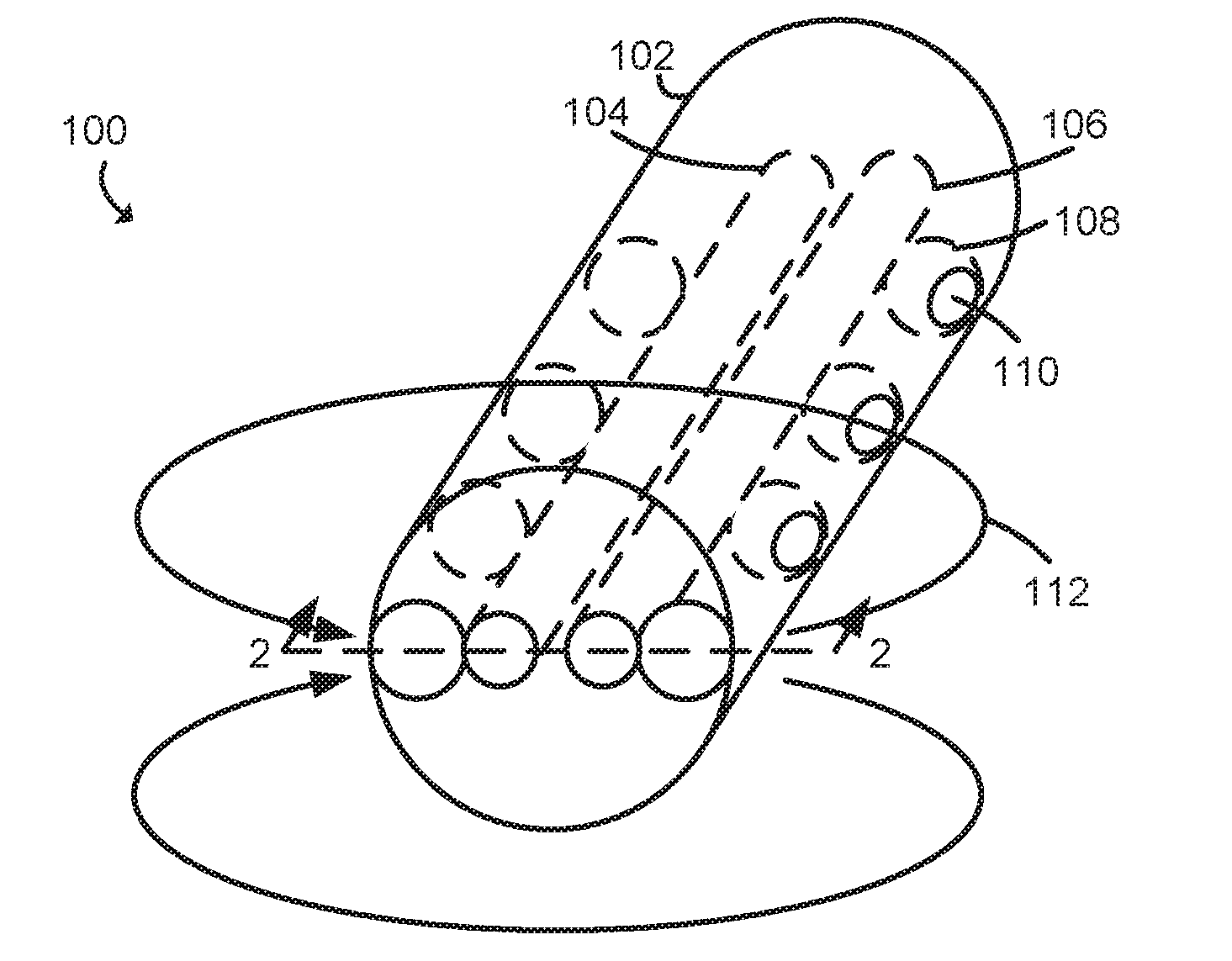
The researchers’ approach involves a fiber, consisting of two different cores running along its axis and a sheath with multiple holes evenly distributed along the length of the fiber. At each hole, one of the cores is exposed to the surrounding environment, which allows the formation of an electric field directly in the wound area.
The electric field arises due to the electrochemical interaction between the two cores. For example, zinc and silver can be used as core materials. These metals are well known for their biocompatible and antimicrobial properties. Alternatively, an external voltage source can be connected to the cores to generate the electric field. The electric field strength in the surrounding environment is at least ten millivolts per millimeter, which is considered sufficient to inhibit bacterial growth.
The technology also offers additional capabilities: the fiber contains a biocompatible polymer sheath and a soluble biocompatible coating designed for gradual dissolution in the wound environment. Inside the sheath, there may be a fluid channel with one or more outlets for delivering medications directly to the damaged area.
This combination of electrical stimulation, drug delivery capabilities, and compatibility with existing surgical methods makes such fibers a promising tool. In the future, they could significantly reduce the risk of infections, accelerate healing, and improve treatment outcomes.